Viola Davis
EGOT Winner and Pioneering Artist

“The only thing that separates women of color from everyone else is opportunity.”
Viola Davis, EGOT Winner and Producer
From a childhood marked by profound poverty and deep-seated shame to becoming one of the most award-winning performers of her generation, the journey of Viola Davis is a powerful story of resilience and strength. A pioneering artist, producer, and advocate, Viola Davis is the only African American actor to have achieved the “Triple Crown of Acting” (Tony, Oscar, Emmy). With her Grammy win for the audio-book of her memoir, Finding Me, she is also one of the very few to have EGOT status.
Viola Davis uses her platform to demand complexity, authenticity, respect and opportunity for marginalized voices in Hollywood and beyond.

Viola Davis was born on August 11, 1965, in a one-room shack on her grandmother’s farm in St. Matthews, South Carolina, a site known as the Singleton Plantation, long tied to slavery. She was the youngest of six children. Soon after she was born, her family moved to Central Falls, Rhode Island, where they experienced extreme poverty, racism and hunger.
Her childhood was marked by intense hardship: the family lived in condemned, rat-infested apartments without reliable heat, where the young Viola Davis had to tie rags around her neck at night to ward off rat bites. Amid chronic hunger, she and her siblings were forced to forage for food in maggot-filled garbage bins behind stores. Her home environment was also one of deep dysfunction, including brutal domestic violence. That left painful wounds in Ms. Davis. In an early brush with activism that reflects her mother’s own scarred youth, Ms. Davis went to jail with her mother at just two months old after a Civil Rights Movement demonstration.
Bullied for her dark skin and poor hygiene, Viola Davis had a traumatic time in school. She often felt “invisible,” leading her to internalize deep shame and act out. Viola Davis later found her purpose in the arts at Central Falls High School when she became active in drama. It’s where, as she has said, “Her imagination found a spark.”

After participating the federal program Upward Bound, Viola Davis graduated from Rhode Island College in 1988 and went on to the renowned Julliard School. However, she described her experience there as an “out-of-body erasure,” feeling pressured to become a “perfect white actress” through a Eurocentric curriculum. She felt compelled to leave her authentic Black self “at the front door,” which made her unprepared for the challenging Black roles she would soon play.
Ms. Davis’s acting career took off in the 1990s with small stage roles in Rhode Island and New York. Making her Broadway debut in August Wilson’s Seven Guitars in 1996, she earned her first Tony nomination. She appeared on various TV shows, but her fierce portrayals on stage were whatcatapulted her career. Winning her first Tony award for playing Tonya in Wilson’s King Hedley II (2001), she drew on her own traumatic childhood and infused powerful emotional depth into complex Black female characters. She won her second Tony award for her role in Fences.
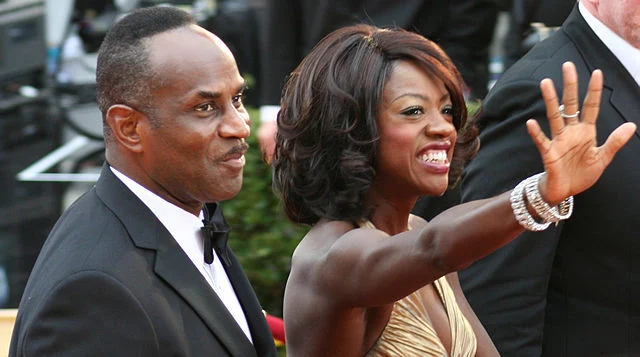
photo from Creative Commons
Viola Davis met her fellow actor husband, Julius Tennon, in 2001, while filming the CBS medical drama City of Angels. Referred by a friend, they began dating and were engaged within a few months. Married in an intimate ceremony in 2003, they continue to support each others’ careers. AsJulius Tennon said in an interview with People Magazine, “We have so much respect for one another and then we both kind of have the same synergy. So it just flows with us.”

As she continued to appear on both Broadway and television, Viola Davis’s star rose. She earned Academy Award nominations for Doubt and The Help. In 2015, Ms. Davis made history as the first Black woman to win the Prime time Emmy Award for Outstanding Lead Actress in a Drama Series for her role in How to Get Away with Murder. While winning this award was rewarding, she learned that that some Black actors dismissed her as “not pretty enough” due to her dark skin and facial features. This critique harkened back to her years being bullied as a child, but she did not let that criticism stop her.
In an exciting acknowledgment of her excellence, Ms. Davis earned Triple Crown status by winning the Academy Award for Best Supporting Actress for the 2016 film adaptation of Fences.

Based on her experiences, and driven by a deep seated need to expand the types of roles for people of color, Ms. Davis and her husband, Julius Tennon, founded JuVee Productions in 2011. As he said in the Guardian, “While we had this elevation in the industry, we felt it was a chance to give opportunities to others, whether that be actors or below-the-line people. We consider ourselves the voice of the voiceless.” As Viola Davis has said, “I want to put truth on the screen. I want real women to see real women on the screen.”
As their website explains, JuVee Productions is “crafting dynamic stories spanning the broad spectrum of humanity.” Moving away from harmful stereotypes and focusing on films like The Woman King, JuVee Productions also produced the documentary series The Last Defense on wrongful convictions and Two-Sides exposing police brutality against African Americans.
Without fanfare, but with clear purpose and intention, Ms. Davis established the Davis-Tennon Foundation with her husband to fund education and health initiatives in Central Falls, Rhode Island, the same place she experienced such trauma and shame. She converted her pain into service for others.
In 2014, remembering her own awful days going hungry, Viola Davis joined the Hunger Is campaign to combat childhood hunger, launching the $30K in 30 Days Project raise money for food banks.
Ms. Davis supports both the #MeToo and Black Lives Matter movements and marched in the 2018 Women’s March. When program closures were eminent for the Central Falls High School’s theater program and library, Ms. Davis gave generously. She heralded changes in beauty standards with her 2019 ambassadorship with L’Oréal Paris, calling for diversity and representation of all women.
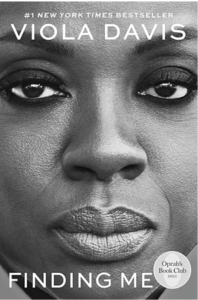
Most recently, Viola Davis earned EGOT status when she won a Grammy Award for the audiobook narration of her memoir, Finding Me.
Ms. Davis was honored with the Cecil B. DeMille Award at the 2025 Golden Globes and received honorary doctorates from Rhode Island College and Indiana University. Her incredible contributions as an artist, including seventeen Emmy nominations, five Screen Actors Guild awards, and her status as only one of three EGOTs make her one of the msot impactful women in her industry. As she has said, reworking Alice Walker’s words, “Your purpose is not what you do, its what happens to people when you do what you do.”
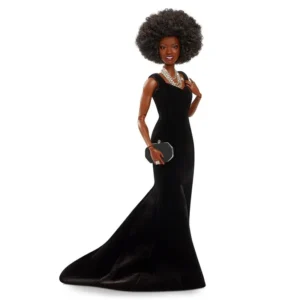
In 2024, Mattel honored Viola Davis with a one-of-a-kind Barbie doll by in celebration of Barbie’s 65th anniversary. The doll reflects her authentic self, showing off her natural afro and elegant gown from her appearance at the 2018 Golden Globes. As she posted on Instagram, “6 year old Viola is squealing. 58 year old Viola is….proud.”
Throughout her life, Viola Davis has advocated for:
- Arts which represent all marginalized populations
- Equality for all marginalized people
- Women’s rights
- Education
- Ending hunger and poverty

Lessons from Viola Davis’ Life:
Own Your Full Story: Viola Davis demonstrates that deep personal trauma and hardship are not shameful, but rather raw material for empathy and meaningful artistic creation. Her life experiences have shaped the kind of actress she is today. As she has said, “The most revolutionary thing a woman can do is fully love herself in a world that profits from her self-doubt.”
Fight Invisibility with Truth: Her experience with colorism and the Eurocentric pressures of acting training at Julliard highlight her lifelong journey to be seen fully and completely as she is. She refused to “shrink herself” or dilute her identity. “I’m a Black woman who grew up in poverty. My story is the story of so many women who are never seen, never heard.”
Create Your Own Opportunity: When she saw the lack of meaningful roles for people of color, she co-founded JuVee Productions, becoming the change she wanted to see.

Action Steps You Can Take:
- Demonstrate support for inclusive storytelling by seeking out and celebrating work from diverse companies like JuVee Productions.
- Engage with the issues of social inequality by supporting community-based organizations that address critical challenges like housing and domestic violence in your area.
- Consider what stereotypes or biases are perpetuated at local schools. Advocate for more diverse perspectives and better representation.

Did this article inspire you?
Please share your feedback and share it with others here: