Michelle Bachelet
Breaking Glass Ceilings and Fighting Oppression

“Social justice is not a luxury, it is a necessity for a healthy and thriving society.”
Michelle Bachelet
The Honorable Michelle Bachelet, the first woman president of Chile, is an amazing trailblazer who broke glass ceilings, stood up to oppression and improved the lives of her citizens. Fluent in six languages, she has brought about systemic change in education, healthcare, women’s rights, and the environment.
Verónica Michelle Bachelet was born in Santiago, Chile, to a mother who was an archeologist and a father who was an air force general. Her father’s military career led the family to Bethesda, Maryland for two years, where she learned English in school. She excelled in sports, music and theater before attending medical school at the University of Chile.

While in medical school, she joined the Socialist Youth and supported Salvador Allende. Her life changed forever when Pinochet’s military coup resulted in her father’s arrest, torture and subsequent heart failure. In 1975, Ms. Bachelet and her mother faced a similar fate, when they were interrogated and tortured. Fortunately, they were released and exiled, first to Australia and then East Germany. This horrific experience at a young age instilled Michelle Bachelet’s deep commitment to social justice and human rights.
While in Germany, she met her husband, another Chilean exile and architect, and they had two children. She returned to Chile and received her medical degree in pediatrics and public health. For seven years, she practiced medicine, working with non-profits supporting children affected by the dictatorship. Witnessing their trauma cemented her understanding of the need for social change.

Ms. Bachelet became active in the Socialist Party in the 1990’s, learning and studying as she took on more responsibility. With her keen intelligence and curiosity, she analyzed military strategy at Chile’s National Academy of Political and Strategic Studies and attended the Inter-American Defense College in Washington, D.C. She went on to obtain a master’s degree in military science from the Chilean Army’s War Academy.
Balancing her medical background with her interest in politics, Michelle Bachelet was appointed Minister of Health in 2000, where she instituted the AUGE health plan and reduced hospital waiting times by 90%. She also permitted free emergency contraception for sexual abuse survivors.
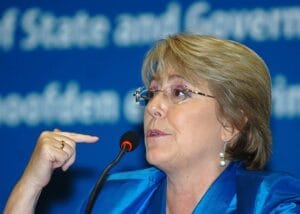
Breaking her first glass ceiling, in 2002, she became the first woman in Latin America to serve as Minister of National Defense. She modernized the armed forces and broke down barriers between the military and civilians. In 2006, she was elected as Chile’s first woman president, breaking another glass ceiling. She went further and smashed more ceilings by appointing a gender-parity cabinet, a groundbreaking achievement. “For me, a better democracy is a democracy where women do not only have the right to vote and to elect but to be elected.”
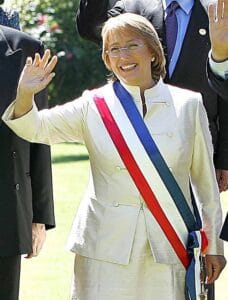
A popular leader with clear vision and intention, President Bachelet focused on sweeping change during her first term. Boldly dismantling antiquated systems, her administration also reduced poverty and promoted early childhood education. Creating landmark pension reform, she guaranteed minimum benefits for the poorest citizens, and gave bonuses to women for each child they had.

An incredibly generous philanthropist, Dolly Parton has donated to HIV/AIDS research as well as disaster relief. In 2020, she donated $1 million to help fund COVID-19 vaccine research. The Dollywood Foundation focuses on education in Tennessee and provides scholarships to help children thrive in school. Because of her philanthropy, the school dropout rate decreased from 30% to 6% in Sevier County, Tennessee. And her environmental philanthropy has helped preserve eagles. Dollywood partnered with the American Eagle Foundation to provide one of the largest eagle sanctuaries in the U.S. Ms. Parton is also a long time supporter of LGBQT+rights, quoted in Billboard saying, “I think everybody should be allowed to be who they are, and to love who they love.”
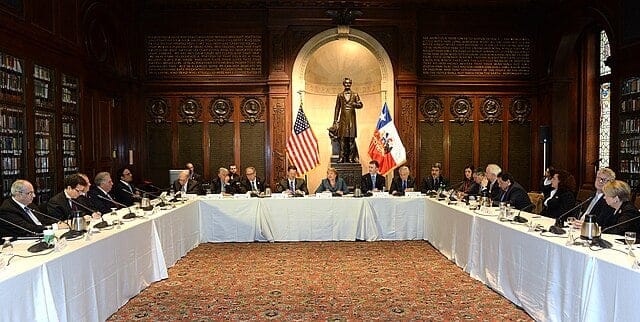
Reacting to massive student protests, she enacted the 2009 General Education Law to improve quality and access. President Bachelet’s administration initiated programs which gave computers to high-achieving low-income students. Her health innovations expanded free medical care for the elderly and mandated sex education. As she said: “A democracy does not mean much if it doesn’t respond to the needs and will of its people.“
Term limits meant she could not be immediately re-elected. Instead, she served the world. For three years, Michelle Bachelet, breaking another glass ceiling, served as the first Executive Director of UN Women, advancing gender equality globally and combating gender-based violence.
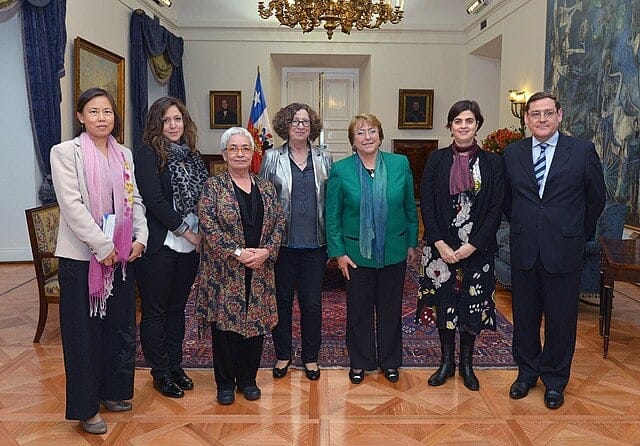
After returning to Chile, she won the December 2013 presidential election, continuing her progressive agenda targeting systemic disparities with sweeping educational reforms, giving free tuition to the poorest students and expanding state funding for public universities.
Making huge strides towards inclusivity, President Bachelet addressed gender and LGBTQ+ rights by creating the Ministry for Women and Gender Inequality, and passing legislation for same sex marriage. She strongly advocated for environmental protections, developing large marine parks and national reserves.
Later, as UN High Commissioner for Human Rights from 2018 to 2022, Ms. Bachelet addressed the Covid-19 pandemic and advocated for investigations into global injustices in China and Iran.
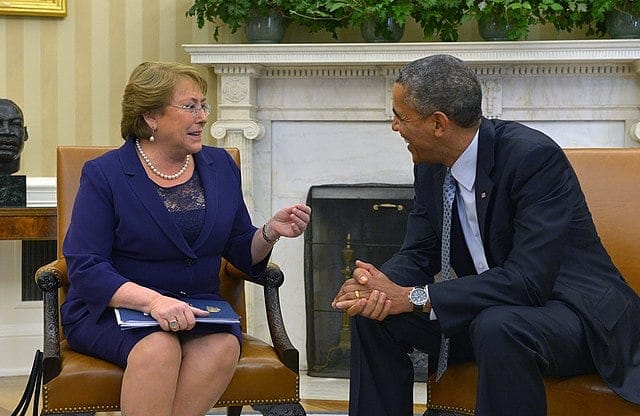
After her U.N. career, Michelle Bachelet continued to encourage dialogue and promote positive change by founding the “Horizonte Ciudadano” think tank focusing on equity, children’s rights, and environmental justice.
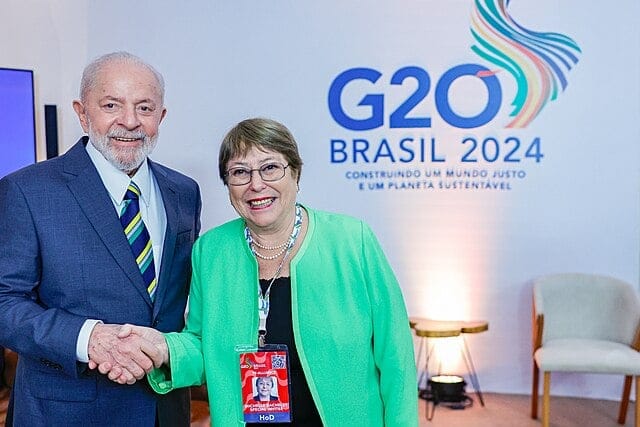
Clearly an exceptional leader on the global stage, Michelle Bachelet has been honored with many awards, including rankings on Forbes’ list of the World’s 100 Most Powerful Women, the Ramón Rubial Award for Freedom and Democracy, and the Defense of Freedom and Democracy Award. Cracking one more glass ceiling, she was the first woman to receive an honor from the South American Football Confederation.
The legacy of Michelle Bachelet is her enduring passion for social justice, honed from her own harrowing personal experience. With courage and strength, she developed innovative policies which significantly helped lift the oppressed. Her life is an example of what can happen when women lead with empathy, boldness and ingenuity.
Throughout her career, Michelle Bachelet has advocated for:
- children’s rights
- access to education
- the environment
- women’s rights
- LGBQT+ rights
- equity and inclusion
- human rights

Lessons from Michelle Bachelet’s Life:
Creating Systemic Change with Integrity
The second time she served as president, Michelle Bachelet took a powerful stand against corruption. She established the Comisión Engel, an advisory body which offered hundreds of innovative ideas to improve transparency, identify conflicts of interest, and stem abuse of power. “Effective governance requires transparency, accountability, and the involvement of all stakeholders.”
Share Your Gifts Globally
While Michelle Bachelet could have retired after her first administration as Chile’s president, she instead chose to serve the world. As the first Executive Director of U.N. Women, she used her innovation and ingenuity to advance gender equality globally, advocate for economic equality, and to advance efforts to stop violence against women. She believed in giving back and lifting others. “I believe in a society that is fair and just, where everyone has equal opportunities and access to basic rights.”
Be a Trailblazer
Throughout her career, Michelle Bachelet repeatedly broke through glass ceilings as Chile’s first woman Minister of Health, the first woman Minister of Defense in Latin America, and the first woman president of Chile. She made sweeping reforms in education, health and the military, all designed around social justice, inclusivity and equality, while emphasizing transparency and integrity. “In my years in public life, I have seen it all. Human beings always have a choice: to collaborate, to trust, and to believe in the possibility of a better future.”

Action Steps You Can Take:
- Each of you has unique gifts and talents. Where can you boldly share those gifts with a broader audience?
- Michelle Bachelet had many interests and passions. Which two of your passions can you study more and further your knowledge?
- Where can you take a stand for the human rights of others? Perhaps you could start a petition or an online fundraiser.

Did this article inspire you?
Please share your feedback and share it with others here: