Malala Yousafzai
Don't Let Anyone Silence Your Voice
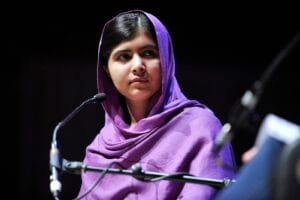
“We realize the importance of our voices only when we are silenced.”
Malala Yousafzai
Imagine living in tyranny, with your rights denied and your voice silenced. Then you resolve to share what was happening with the world, at great personal peril. That’s Malala Yousafzai’s journey of unshakable courage and fearless advocacy.
Born in 1997 in the Swat Valley of Pakistan, a region once known for its beauty and poetry, but later plagued by violence, Malala Yousafzai grew up believing that education was a birthright, not a privilege. Her father, a teacher and education activist, ran a local school and nurtured her love for learning. In a country where girls were often denied education, Malala Yousafzai learned to read and to raise her voice when faced with injustice.

And raise it she did. At just 11 years old, under Taliban rule in Pakistan, she risked her life to promote girls’ education. Malala Yousafzai began blogging anonymously for the BBC under the pseudonym Gul Makai, describing life under the Taliban. Her words exposed the fear, injustice, and longing for normalcy experienced by so many young girls like her. Her voice became a beacon for millions, but it also made her a target.
In October 2012, the Taliban attempted to silence her permanently. As she rode home from school, gunmen boarded her bus and shot her in the head. The attack was meant to silence her. The world responded with outrage, and global awareness about the need for girls’ education soared.

Malala Yousafzai not only survived the shooting, she became a woman with global impact. More than a writer, she is also a strategist and visionary. Following her recovery, she co-founded the Malala Fund with her father to champion education for girls across the globe. The Fund works in regions where the barriers to girls’ education are steepest: war zones, refugee camps, and areas of entrenched poverty. Through the Malala Fund, she works tirelessly in the interest of one day ensuring that every girl, everywhere, can access 12 years of free, quality education. Her activism is rooted in the belief that education is not just an investment in children; it is an act of resistance to oppression. Speaking at the United Nations, she said “I raise up my voice—not so that I can shout, but so that those without a voice can be heard.”
In 2014, at the age of 17, Malala Yousafzai became the youngest person ever awarded the Nobel Peace Prize. Her acceptance speech, delivered with a mix of humor and humility, is both powerful and haunting: “I had two options,” she said. “One was to remain silent and wait to be killed. The second was to speak up and then be killed. I chose the second one.”
Malala Yousafzai is not just a peer in advocacy, but a sister in the struggle. Her work speaks directly to the hearts of women who have also fought to learn, to lead, and to liberate others.

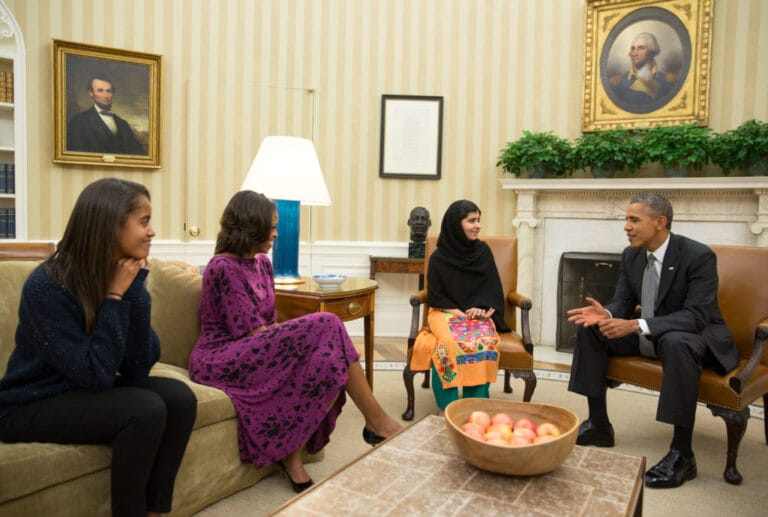
Malala Yousafzai’s activism is not confined to stages or awards. It lives in her daily choices. She pursued her own education at Oxford University, earning a degree in Philosophy, Politics, and Economics. She has stood with Syrian and Rohingya refugees. She has met with world leaders not for photo ops, but to press them for change. And she truly listens, to young girls, to mothers, to frontline educators. She knows that real change does not trickle down; it rises up.
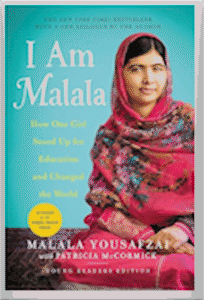
Her 2013 memoir, I Am Malala, became a manifesto for youth across the world, particularly girls, who saw in her a mirror of their own hopes and dreams. But Malala Yousafzai has never rested on being a symbol; she is a builder. Through the Malala Fund’s “Gulmakai Network,” she supports grassroots activists, many of them women, who are advancing educational access in their own communities. Her legacy is not her survival. It is the seed she is planting in every girl who dares to believe her voice matters.
In a world still full of barriers for girls and women, Malala Yousafzai’s life is a call to action: to speak up, to stand firm, and to believe in the transformative power of education.Her heroic activism blends personal resilience with international diplomacy.
She passionately advocates for girls in 20 countries, promoting:
• gender equity
• education for girls
• peace
• activism

Lessons from Malala Yousafzi’s life:
For Malala Yousafzai, the right to learn is not just personal, it’s political. Her continued advocacy reinforces the idea that education itself is a form of resistance, especially in places where authoritarian regimes reign. As she says, “One child, one teacher, one book, and one pen can change the world.”

Action Steps You Can Take:
Like Malala Yousafzai, your voice can change the world. When you’ve been denied access to programs or opportunities, your resilience and perseverance enabled you to keep going.
- What opportunities have you been denied? How did you endure and press on?
- How can you apply that same perseverance to other areas of your life?
- What education do you still want to acquire?
- What’s the first step you can take toward furthering your education today?

Did this article inspire you?
Please share your feedback and share it with others here: