
Jeannette Rankin
First Woman in Congress
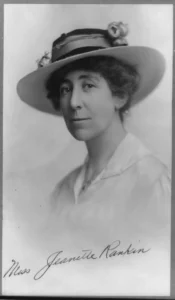
“I may be the first woman member of Congress, but I won’t be the last.”
Jeannette Rankin
Those words were not a boast. They were a promise. And like so many promises made by Representative Jeannette Rankin, history has spent more than a century catching up to them.
Representative Jeannette Rankin was a history-making politician, a lifelong pacifist, and a trailblazing suffragist whose principled stance against war and unwavering commitment to women’s rights led the way for generations of women leaders. She was a woman who entered power without surrendering conscience, a legislator who understood that history is shaped not only by victories, but by refusals. Born in 1880 on a ranch in Montana, the eldest of seven children, Jeannette Rankin was raised in a household that prized independence, education, and responsibility to others. Those values never left her. They simply grew sharper with time.
photo by Adam Cuerden
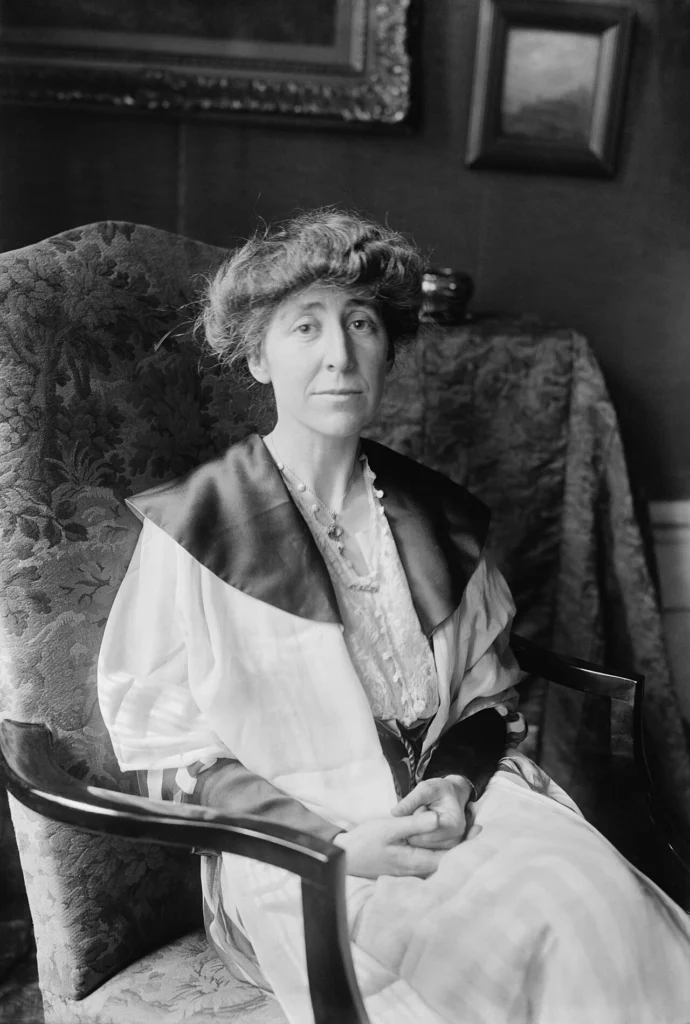
After graduating from Montana State University in 1902, Jeannette Rankin moved through a series of working lives, teacher, seamstress, social worker, each one bringing her closer to the realities faced by women whose labor was undervalued and whose voices were excluded. In Seattle and San Francisco, she witnessed industrial exploitation firsthand. It was embodied, daily, in women’s bodies and wages. That clarity led her east in 1908 to the New York School of Philanthropy, now Columbia University’s School of Social Work, where reform was actively pursued. There she found her political compass in the suffrage movement. Her logic was simple and devastatingly precise: “We’re half the people; we should be half the Congress.”
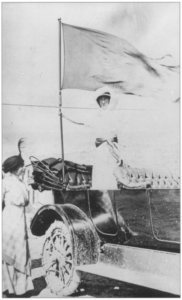
When Jeannette Rankin returned to Montana, she carried that clarity with her. As a field secretary for the National American Woman Suffrage Association, she traveled thousands of miles by train, horseback, and sheer determination, organizing rallies and confronting legislators who had never imagined being accountable to women. In 1914, Montana granted women the right to vote, years ahead of the nation. That victory emerged from organized persistence.
Two years later, in 1916, Jeannette Rankin made history by becoming the first woman elected to the United States Congress, at a time when most American women were still barred from the ballot box. When she took her seat in April 1917, applause filled the gallery. What a moment of profound significance for women nationwide!
Photo by National Photo Company
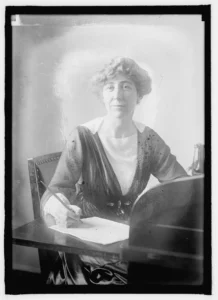
Her term in Congress immediately led into a test of her conscience. Four days after her swearing-in, Jeannette Rankin faced a vote on declaring war against Germany. She was a committed pacifist in a moment intoxicated with militarism. She voted no. Fifty members of the House joined her. She alone was a woman. She captured her patriotism and commitment to pacifism with these words: “I want to stand by my country, but I cannot vote for war.”
The political cost was immediate. Her Senate bid in 1918 failed. But the historical meaning of that vote has only deepened. Rankin demonstrated that principle is not weakness and that dissent, when grounded in ethics, is noble.
During her first term, Jeannette Rankin fought fearlessly for families. She advanced legislation aimed at the material lives of women and children, including early proposals for federally funded maternal and infant health care that would later become the Sheppard-Towner Act. She advocated for an eight-hour workday, for safer labor conditions, and for a federal suffrage amendment that passed Congress in 1919.
photo by Harris and Ewing
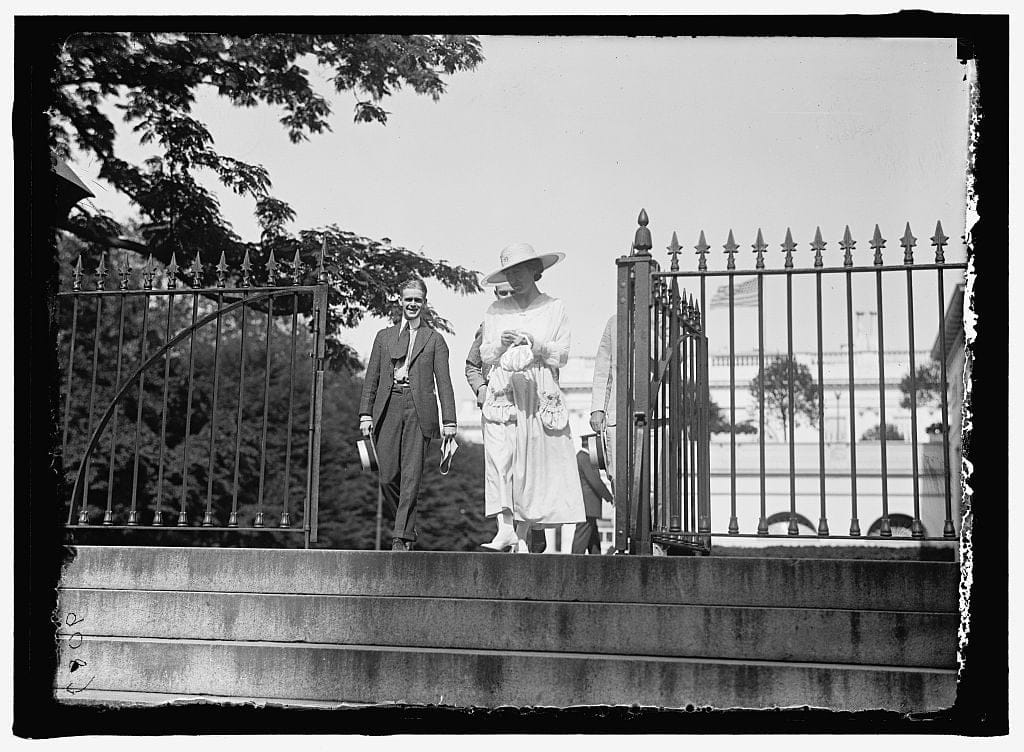
After leaving Congress, Jeannette Rankin remained a true changemaker. For more than two decades, she worked within international peace movements, studying nonviolent resistance across the globe, including the work of Gandhi in India. She understood peace not as passivity, but as disciplined resistance to systems that normalize destruction.
In 1940, Jeannette Rankin returned to Congress, elected once again from Montana, this time on an explicitly pacifist platform. That platform was soon tested. On December 8, 1941, one day after the attack on Pearl Harbor, Congress voted on declaring war against Japan. Jeannette Rankin cast the sole vote against war. She said, “As a woman I can’t go to war, and I refuse to send anyone else.” It was an act of extraordinary political courage, and one that isolated her completely.
The backlash for Jeannette Rankin’s vote was swift and furious. She had to have a police escort as crowds jeered. Her career in electoral politics ended there. But her moral record did not waver. As she said, “You can no more win a war than you can win an earthquake.”
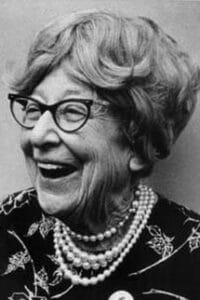
Jeannette Rankin lived long enough to see the wars continue, and long enough to keep resisting them. In 1968, at age 87, she led the Jeannette Rankin Brigade, 5000 women marching on Washington to protest the Vietnam War. Even then, she insisted that women’s political participation was not symbolic, but necessary.
When she died in 1973 at the age of 92, Jeannette Rankin left behind no dynasty, no political machine, no softened version of herself. She left instead a model of integrity that remains inspiring in its consistency. A true trailblazer, she stayed true to her values throughout her entire life.
Jeannette Rankin advocated for:
- Women’s suffrage
- Pacifism and peace
- Workers’ rights
- Child welfare
- Women’s political participation
- Nonviolent resistance
- Social reform

Lessons from Jeannette Rankin’s Life:
Principle over Popularity: Honor your Integrity
Representative Jeannette Rankin voted her conscience twice against war, knowing both votes would be politically devastating. She did not succumb to peer pressue, which modern women leaders still encounter. Jeannette Rankin’s example reminds us that leadership sometimes means standing completely alone. As she said, “I have nothing left but my integrity.”
The Burden of Being “First”
As the first woman in Congress, every action by Jeannette Rankin’s was scrutinized and labelled as representing all women. She navigated male-dominated spaces without a roadmap, leading the way for other women to succeed her. She exemplified how women belong in spaces previously closed to them.
Your Life Experience Influences Your Actions
Jeannette Rankin’s activism started when she witnessed working conditions in Seattle and San Francisco. Instead of ignoring these deplorable conditions, she took action. Her congressional work reflected what she had learned: practical legislation addressing maternal health, child welfare, and working conditions. She could speak authentically of these issues because she witnessed them firsthand.

Action Steps You Can Take:
We are still striving for Rankin’s vision of a representative Congress. Women make up only 28% of Congress, despite being 51% of the population. Here’s how you can continue her work:
• Support the “next” Jeannette Rankin. Research women candidates in your local elections who demonstrate principle over expediency. Volunteer or donate to a woman running on a platform of conviction.
• Practice dissent when it matters. Speak up when a group decision contradicts your values in a boardroom, community meeting, or committee discussion.
• Study peace-making. Learn how to use conflict resolution and nonviolent communication in your professional and personal life.

Did this article inspire you?
Please share your feedback and share it with others here:
